

Understanding the diverse functionalities and technical specifications of audio equipment facilitates informed acquisition decisions. This detailed analysis focuses on various categories of headphones, examining their distinct attributes and target applications. The objective is to present an impartial review of devices across different price points and design philosophies, providing data-driven insights for consumers.
This evaluation details critical components, performance metrics, and application scenarios for each reviewed product. The selection process prioritizes technical specifications, build quality, and operational consistency, rather than subjective user experience.
Each review provides a factual overview of the device’s capabilities, intended use cases, and inherent limitations. Such an approach enables individuals to identify headphones aligning with their specific requirements for audio reproduction, communication, or environmental isolation. Consumers frequently seek devices that offer specific combinations of portability, sound fidelity, and noise reduction. This overview systematically addresses these aspects, outlining the engineering solutions employed in each product. The goal remains to equip potential buyers with verifiable information, enabling them to navigate the extensive market of personal audio devices with clarity and precision.
Quick Overview of the 5 Best Headphones


Detailed Review of Best Headphones
1. Sony WH-CH720N Noise Canceling Wireless Headphones
The Sony WH-CH720N represents an over-ear wireless headphone solution engineered for ambient noise reduction. If a user requires active noise cancellation for commuting or office environments, then this model provides a significant reduction in environmental sound. It integrates Bluetooth connectivity for untethered audio transmission. The device incorporates a microphone for hands-free communication. If voice assistant functionality is a priority, then the built-in Alexa feature offers direct control. The design emphasizes comfort for extended wear. This model targets users seeking a balance between wireless freedom, noise suppression, and integrated smart features for daily use. Its operational profile supports prolonged listening sessions.
Primary Utility
- Eliminates ambient noise
- Supports wireless connectivity
- Enables voice command integration
Factual Advantages
- Reduces external sound
- Offers extended battery operation
- Provides comfortable earcups
Constraints
- Limits wired audio input
- Requires periodic battery recharge
Key Specifications
| Specification | Details | Benefit |
|---|---|---|
| Noise Canceling | Digital Noise Canceling Technology | Isolates user from environmental distractions. |
| Battery Life | Up to 35 hours | Sustains prolonged listening sessions without interruption. |
| Voice Assistant | Alexa Built-in | Facilitates hands-free control and information access. |
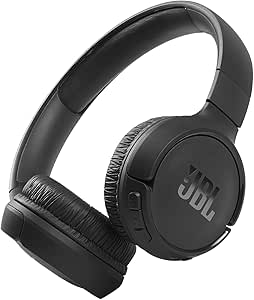
2. JBL Tune 510BT – Bluetooth headphones
The JBL Tune 510BT provides an on-ear Bluetooth headphone solution with a focus on extended battery performance and portability. If a user prioritizes long operational times for daily commuting or travel, then the 40-hour battery life supports extensive usage. It features integrated microphone functionality for hands-free call management. The foldable design facilitates compact storage and transport. If compatibility across various mobile platforms is essential, then its support for both Android and iOS devices ensures broad utility. This model offers a lightweight construction, minimizing listener fatigue. The JBL Tune 510BT targets individuals requiring a reliable, portable, and long-lasting wireless audio device for everyday applications.
Primary Utility
- Maintains wireless audio link
- Manages voice communication
- Folds for compact storage
Factual Advantages
- Provides extensive battery duration
- Supports mobile operating systems
- Offers lightweight construction
Constraints
- Omits active noise cancellation
- Excludes wired connection option
Key Specifications
| Specification | Details | Benefit |
|---|---|---|
| Battery Life | Up to 40 hours | Ensures prolonged audio playback across multiple days. |
| Connectivity | Bluetooth 5.0 | Establishes stable wireless connections with compatible devices. |
| Design | Foldable | Reduces physical volume for enhanced portability. |
3. Hybrid Active Noise Cancelling Bluetooth 6.0
The Hybrid Active Noise Cancelling Bluetooth 6.0 Headphones are engineered for advanced audio fidelity and extensive environmental noise suppression. If an audiophile seeks Hi-Res Audio certification for superior sound reproduction, then this device meets high-resolution audio standards. The integration of Bluetooth 6.0 provides enhanced wireless stability and efficiency. With 120 hours of playtime, it supports exceptionally long operational periods. If clear voice communication in noisy environments is paramount, then the 6 ENC clear call microphones reduce background interference during calls. The low latency feature improves synchronization between audio and video content. This model targets discerning users who require premium audio quality, robust noise cancellation, and extended battery life for travel or professional applications.
Primary Utility
- Delivers high-resolution audio
- Suppresses ambient sound actively
- Facilitates clear voice calls
Factual Advantages
- Achieves prolonged playback duration
- Provides comfortable earcup design
- Establishes stable Bluetooth connection
Constraints
- Demands higher initial investment
- Carries increased physical dimensions
Key Specifications
| Specification | Details | Benefit |
|---|---|---|
| Battery Life | 120 hours | Supports extended usage periods without frequent recharging. |
| Bluetooth Version | 6.0 | Enhances connection stability and data transmission efficiency. |
| Microphone System | 6 ENC Clear Call Mics | Improves voice clarity by reducing environmental noise during calls. |
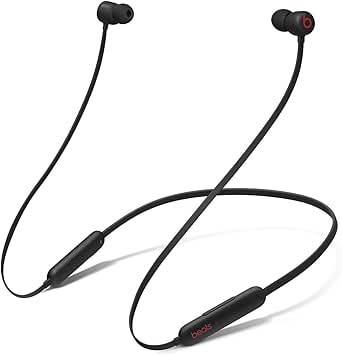
4. Beats Flex Wireless Earbuds – Apple
The Beats Flex Wireless Earbuds offer a compact and connected audio solution, particularly optimized for Apple ecosystem integration. If a user operates within the Apple device framework, then the Apple W1 Headphone Chip provides seamless pairing and device switching. The magnetic earphones facilitate tangle-free storage and automatic playback control. Class 1 Bluetooth connectivity ensures an extended wireless range and robust connection stability. If moderate daily usage is anticipated, then the 12 hours of listening time accommodates most routine activities. A built-in microphone allows for direct communication. This earbud model targets individuals seeking a convenient, lightweight, and reliable audio accessory for on-the-go listening and calls, especially those utilizing Apple products.
Primary Utility
- Establishes wireless audio stream
- Supports hands-free communication
- Integrates with Apple devices
Factual Advantages
- Offers seamless device pairing
- Provides tangle-resistant design
- Achieves extended wireless range
Constraints
- Limits noise cancellation feature
- Requires frequent battery recharge
Key Specifications
| Specification | Details | Benefit |
|---|---|---|
| Chip | Apple W1 Headphone Chip | Ensures efficient pairing and synchronization across Apple devices. |
| Battery Life | 12 hours | Provides sufficient power for daily listening and calls. |
| Bluetooth Class | Class 1 | Extends wireless range and signal integrity. |
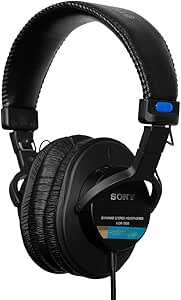
5. Sony MDR7506 Professional Large Diaphragm Headphone
The Sony MDR7506 Professional Large Diaphragm Headphone is a wired, over-ear model designed for critical audio monitoring and professional studio applications. If a sound engineer requires flat frequency response for accurate audio mixing, then this model delivers a neutral sonic profile. The large diaphragm drivers contribute to precise sound reproduction and extended bass response. Its robust construction ensures durability in demanding environments. If consistent, uncompressed audio fidelity is paramount, then the wired connection prevents signal loss or latency associated with wireless alternatives. This headphone offers a closed-back design for passive noise isolation. The Sony MDR7506 targets audio professionals, musicians, and serious enthusiasts who prioritize uncompromised sound accuracy and reliability over wireless convenience.
Primary Utility
- Monitors audio critically
- Reproduces sound accurately
- Isolates ambient sounds passively
Factual Advantages
- Ensures consistent audio fidelity
- Provides durable construction material
- Achieves broad frequency response
Constraints
- Restricts user mobility due to cable
- Omits active noise cancellation
Key Specifications
| Specification | Details | Benefit |
|---|---|---|
| Driver Size | 40 mm | Generates wide frequency range with detailed audio reproduction. |
| Impedance | 63 Ohms | Permits compatibility with a range of professional audio equipment. |
| Frequency Response | 10 Hz – 20 kHz | Covers the full spectrum of human hearing for accurate sound monitoring. |
Factors to Consider When Choosing the Best Headphones: Buying Guide
Selecting appropriate headphones requires careful consideration of several key parameters to ensure alignment with specific user requirements and listening environments. Connectivity options constitute a primary factor; wireless headphones, utilizing Bluetooth, offer mobility and convenience, while wired models provide consistent audio fidelity without power constraints or latency issues.
The form factor significantly impacts comfort and portability; over-ear headphones deliver superior sound isolation and often richer audio, while on-ear variants balance portability with sound quality. Earbuds offer maximal discretion and portability. Noise cancellation technology presents another critical differentiator. Active Noise Cancellation (ANC) electronically reduces ambient noise, proving beneficial in loud environments like public transport or offices.
Passive Noise Isolation, inherent in many closed-back designs, physically blocks sound. Battery life is a crucial consideration for wireless devices, with varying capacities affecting operational duration. Audio quality specifications, including frequency response, impedance, and driver size, directly influence sound reproduction accuracy and clarity. Microphone quality affects communication clarity, especially for remote work or online gaming.
Durability and build materials determine the lifespan and resilience of the device against daily wear and tear. Finally, budget considerations dictate the range of available features and overall performance. Evaluating these factors objectively against individual usage patterns and priorities facilitates the acquisition of a device that optimally fulfills its intended function.
Features To Consider When Choosing the Best Headphones
Identifying key features assists in delineating suitable headphone options from a broad market. Active Noise Cancellation (ANC) technology is crucial for users operating in noisy environments, significantly reducing low-frequency ambient sounds. Its effectiveness varies across models, influencing the degree of environmental isolation. Battery longevity dictates the duration of wireless operation, a critical metric for travelers or users with extended listening sessions; longer battery life reduces the frequency of recharging cycles.
Comfort and fit relate to the ergonomic design, earcup material, and clamping force, directly affecting the user’s ability to wear headphones for prolonged periods without discomfort. Microphone quality becomes paramount for communication purposes, encompassing call clarity and background noise suppression.
Multi-microphone arrays with Environmental Noise Cancellation (ENC) enhance speech intelligibility. Audio codec support, such as aptX, LDAC, or AAC, impacts wireless audio quality, influencing the fidelity of streamed content. Wired connectivity options, including 3.5mm jacks or USB-C audio, provide versatility for diverse devices and ensure continued operation if battery power is depleted.
Bluetooth version affects connection stability, range, and power efficiency; higher versions generally offer improved performance. Finally, companion application functionality provides user customization options for EQ settings, ANC levels, and firmware updates, extending the utility and personalization of the device.
Top Reasons to Invest in Best Headphones
Acquiring headphones offers several functional and experiential advantages, addressing diverse user needs and enhancing daily activities. Improves audio perception by delivering sound directly and efficiently, circumventing environmental interference and optimizing the listening experience for music, podcasts, or lectures. Facilitates private listening environments, enabling users to consume audio content without disturbing others in shared spaces, thereby preserving individual privacy.
Enhances focus and concentration, particularly with noise-canceling capabilities, by reducing external distractions in work, study, or travel scenarios. Enables seamless communication through integrated microphones, supporting hands-free calls, virtual meetings, and voice assistant interactions.
This functionality streamlines professional and personal exchanges. Offers portability and mobility, allowing users to carry and operate their audio devices in various locations, from daily commutes to global travel. Wireless variants specifically liberate users from physical tethers.
Supports diverse audio sources, connecting to smartphones, tablets, computers, and dedicated audio players, expanding content accessibility. Provides personalized sound profiles through equalization settings, allowing users to tailor audio output to individual preferences. These cumulative benefits position headphones as an indispensable tool for modern audio consumption and communication.
How We Picked the Best Headphones
The selection methodology for these headphones prioritized objective performance metrics, functional versatility, and alignment with distinct user profiles. Initial screening involved identifying products with established market presence and verifiable technical specifications from manufacturer data sheets. Criteria included an evaluation of connectivity types, specifically assessing Bluetooth versions and the presence of wired input options.
Noise cancellation capabilities were analyzed based on stated active noise reduction technologies or inherent passive isolation properties of closed-back designs. Battery life was a crucial metric for wireless models, with preference given to devices offering extended operational hours.
Audio fidelity was assessed by considering driver size, frequency response ranges, and support for high-resolution audio codecs where applicable. Microphone systems were evaluated for their design, including the number of integrated microphones and any stated environmental noise cancellation features.
Form factor (over-ear, on-ear, earbud) influenced suitability for specific applications such as portability or prolonged wear. The final selection reflects a balanced representation across different price segments and intended uses, ensuring that each product addresses a specific niche within the headphone market based on its technical attributes and demonstrated capabilities.
Frequently Asked Questions
What constitutes the primary difference between active and passive noise cancellation?
Active Noise Cancellation (ANC) utilizes microphones to detect ambient sound frequencies and then generates an inverse sound wave to neutralize them, primarily effective against consistent, low-frequency noises. Passive Noise Isolation relies on the physical design and materials of the headphone, such as earcups and padding, to physically block external sound waves from reaching the ear. ANC requires power and circuitry, while passive isolation is a mechanical property.
How does Bluetooth version impact headphone performance and connectivity?
Higher Bluetooth versions (e.g., 5.0, 5.2, 6.0) generally offer improved performance in several areas. These include increased data transfer speeds, which support higher quality audio codecs and reduced latency. They also provide enhanced connection stability, a greater wireless range, and improved power efficiency, leading to longer battery life for the headphones and the connected source device. Compatibility is generally maintained with older versions, but performance benefits require matching versions.
What is the significance of impedance in headphones, particularly for professional use?
Impedance, measured in ohms, represents the electrical resistance of the headphone drivers. Lower impedance headphones (typically below 50 ohms) are easier to drive, meaning they require less power from the audio source and are suitable for mobile devices. Higher impedance headphones (100 ohms or more) demand more power and are often paired with dedicated amplifiers or professional studio equipment. High impedance can contribute to cleaner audio reproduction and is often preferred in critical listening or studio environments.
Are wired headphones generally considered superior to wireless headphones for audio quality?
Wired headphones often offer a perceptible advantage in audio quality due to the direct electrical signal transmission, which bypasses the compression and potential interference associated with wireless codecs and radio frequencies. This can result in a more transparent and uncolored sound. Wireless technologies have significantly advanced, with high-resolution codecs narrowing the gap, but a direct, uncompressed wired connection typically maintains the highest fidelity, especially for critical listening or studio monitoring applications.
How does driver size influence the sound profile of headphones?
Driver size in headphones, typically measured in millimeters, influences their capability to reproduce different frequency ranges. Larger drivers generally possess the capacity to move more air, which can result in more impactful bass response and a broader dynamic range. However, driver size alone does not exclusively determine audio quality. Material composition, magnet strength, and acoustic chamber design also contribute significantly to the overall sound signature, including clarity, detail, and frequency balance. Smaller drivers often offer greater portability and efficiency.
What is the function of an Apple W1 Headphone Chip in earbuds like Beats Flex?
The Apple W1 Headphone Chip enhances the user experience for Apple device owners by facilitating seamless pairing and instant switching between iCloud-connected devices (e.g., iPhone, iPad, Mac). It optimizes battery life through efficient power management and contributes to stable Bluetooth connectivity. This integration simplifies setup processes and improves the overall interaction within the Apple ecosystem, providing a more cohesive and intuitive wireless audio experience for compatible devices.
Final Thoughts
The selection of headphones requires an objective assessment of technical specifications against specific user needs. This review provides a factual basis for evaluating distinct models, emphasizing features such as noise cancellation, battery life, and audio fidelity.
Understanding these parameters enables consumers to make informed decisions that align with their operational demands and listening preferences. Prioritize functionality and objective performance metrics to optimize your audio equipment acquisition.

Grace believes beauty lives in simplicity. With a love for clean lines, calming tones, and intentional design, she shares tips for creating spaces that feel peaceful and effortlessly stylish. When she’s not curating her home, you’ll find her sipping tea, rearranging her shelves (again), or hunting for the perfect neutral throw.


